To read this post in Tigrinya, you can follow the Google Drive link below. ነዚ ጽሑፍ ብትግርኛ ንምንባብ፡ ነዚ ዚስዕብ ናይ ጉግል ድራይቭ መላክቦ ክትከፍት ትኽእል። https://drive.google.com/file/d/1d2cTvKDwHvmAQQe2JxvJ650sLc8Q-2aO/view?usp=share_link
Time goes fast! It has been over six years since we (my family and I) went beyond rivers, and came to Edmonton, Canada. As I write, I am remembering the place where I heard the name Canada for the first time during my childhood. A few years before Eritrea’s independence, our village had become a frontline. The Ethiopian army’s defense trenches ran for kilometers across the slopes on the northern side of our village. My grandfather (my dad’s maternal uncle) had a threshing floor which was located on the western side of our village; it was my second favorite place for viewing the beautiful sunset. One late afternoon I was sitting by that threshing floor together with other kids and adults from our village. The sun was hidden behind the clouds creating a mesmerizing beauty on the horizon. It was at that moment that one of the adults began to speak about the relief food items that were being distributed.
The presence of the Ethiopian army and the fact that our village had become a frontline had interfered with the farming activities and due to that, the people needed support. The adult who was talking about the relief food items said that the wheat was donated by a country called Canada. I think the only names of countries I knew at that time were: Ethiopia, Sudan, America, Saudi Arabia, and Germany and I believed that all of them, including Canada, were behind the horizon.
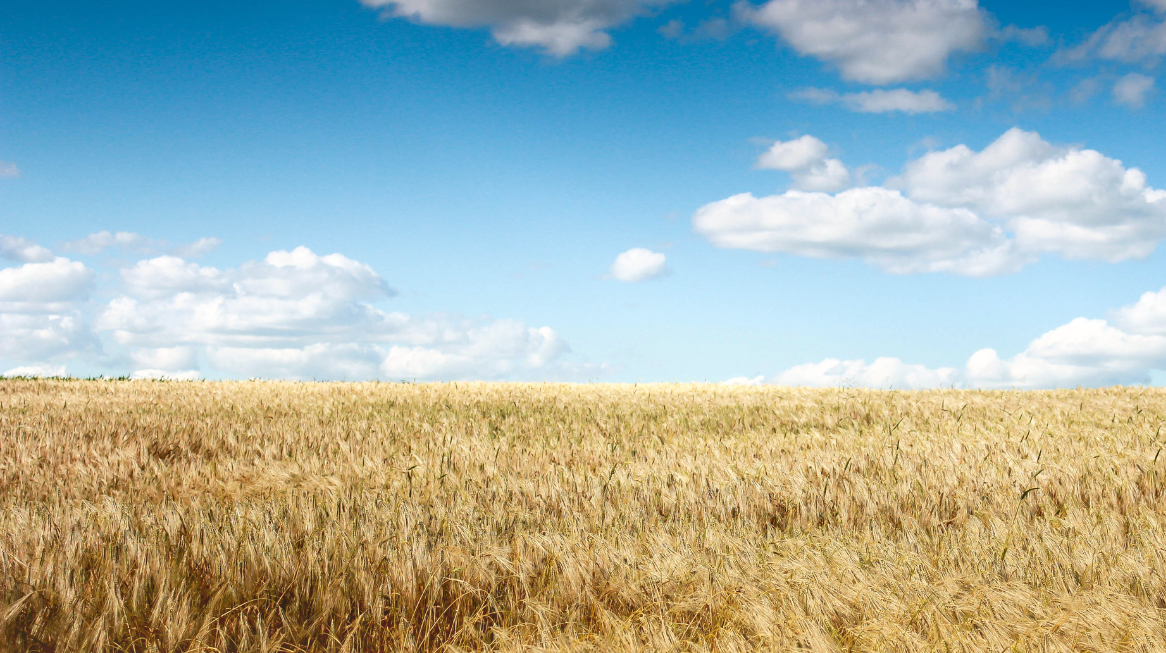
Some families in our village grew wheat at a very small scale and I imagined Canada’s wheat farms in light of that as if wheat should be grown on a very small scale everywhere. As a result, I had thought Canada’s wheat was grown on small farms like ours and donations of some “Ribiits” of wheat were collected from Canadian farmers and then sent to the people in our village and other villages. (Ribiit is a traditional container, usually made from palm leaves, that measures about 3 kilograms).
In May 1991 the Ethiopian army that had disfigured our farms with artillery, trenches, bunkers, latrines, etc. did not only leave our farms but the whole of Eritrea as well. Then every Eritrean thought they would live in the country happily. No one would at that time think that Eritreans would ever need to escape their country. But a few years after the liberation from Ethiopia, things didn’t unfold as was hoped. To date, hundreds of thousands of Eritreans had to make perilous journeys to escape their own country in search of freedom and dignity. I was one of them and thanks to God’s mercy and Canada’s goodwill and amazing humanitarian gesture, I am able to get the freedom and dignity many Eritreans had longed for and are still longing for. Six years of freedom and dignity! Thank you Canada!
In coming to Canada we have not only gone beyond rivers but beyond the Mediterranean Sea and the Atlantic Ocean as well. Back in Eritrea, in most cases, going beyond a river would mean going to a somehow different lifestyle though mostly very minimal. By coming to Canada, we did not only go beyond regular rivers; we went beyond “frozen” rivers as well. Our city, Edmonton has a river by the name North Saskatchewan river that divides the city into two, diagonally. When we came here six years ago the river was frozen as it was winter and we went beyond it to live in the northern part of the city.
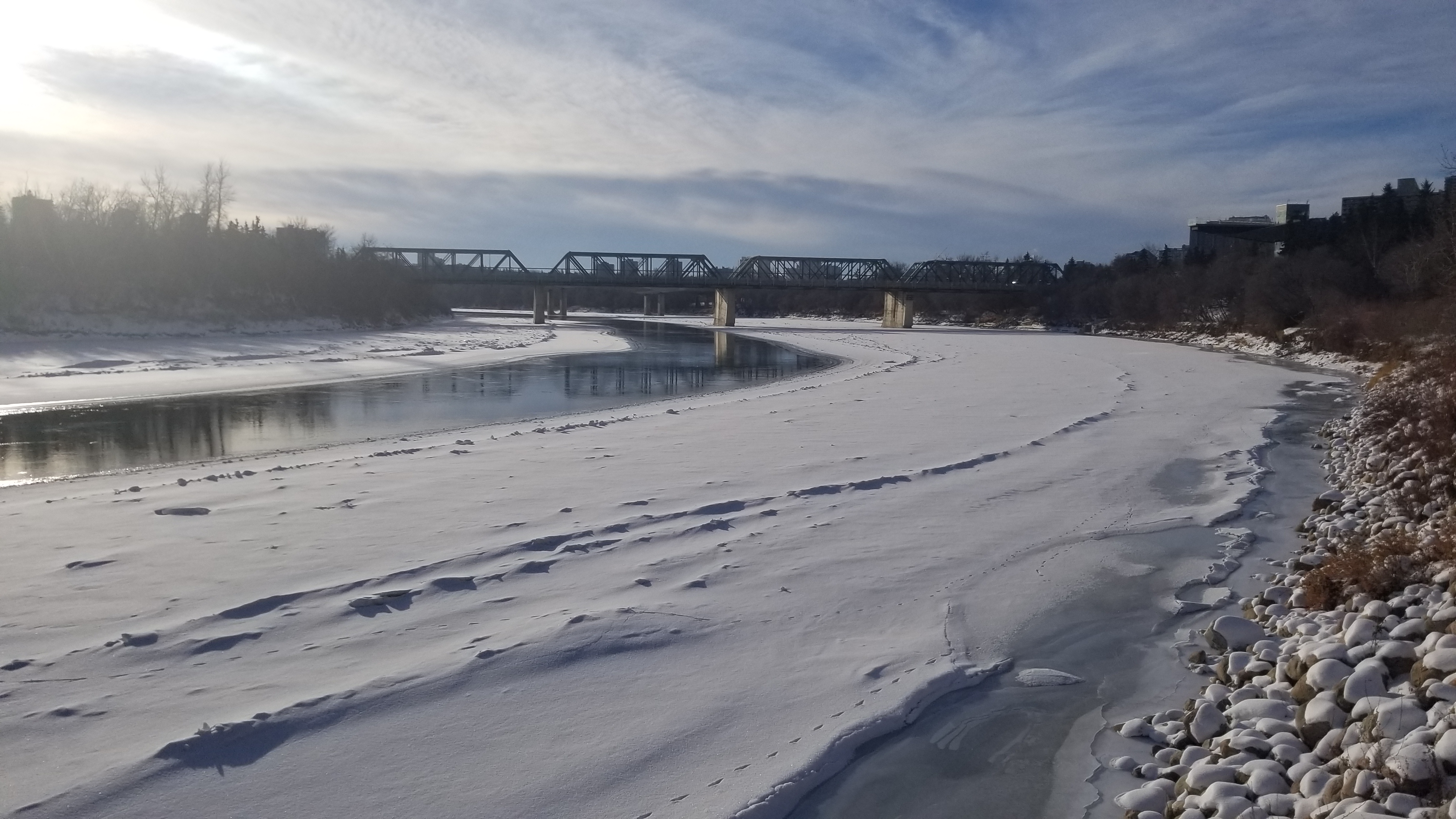
The North Saskatchewan river and its surroundings are among the best attractions in the city and I love walking along its banks. Since we came here I have walked on the beautiful trails that the city made on either side of the river. From the river’s entry point to our city to its exit point from the city, the trails extend more than 40 kilometers.

Twice I walked the distance on my own and once with a few other friends. I also walked some short sections with my family.
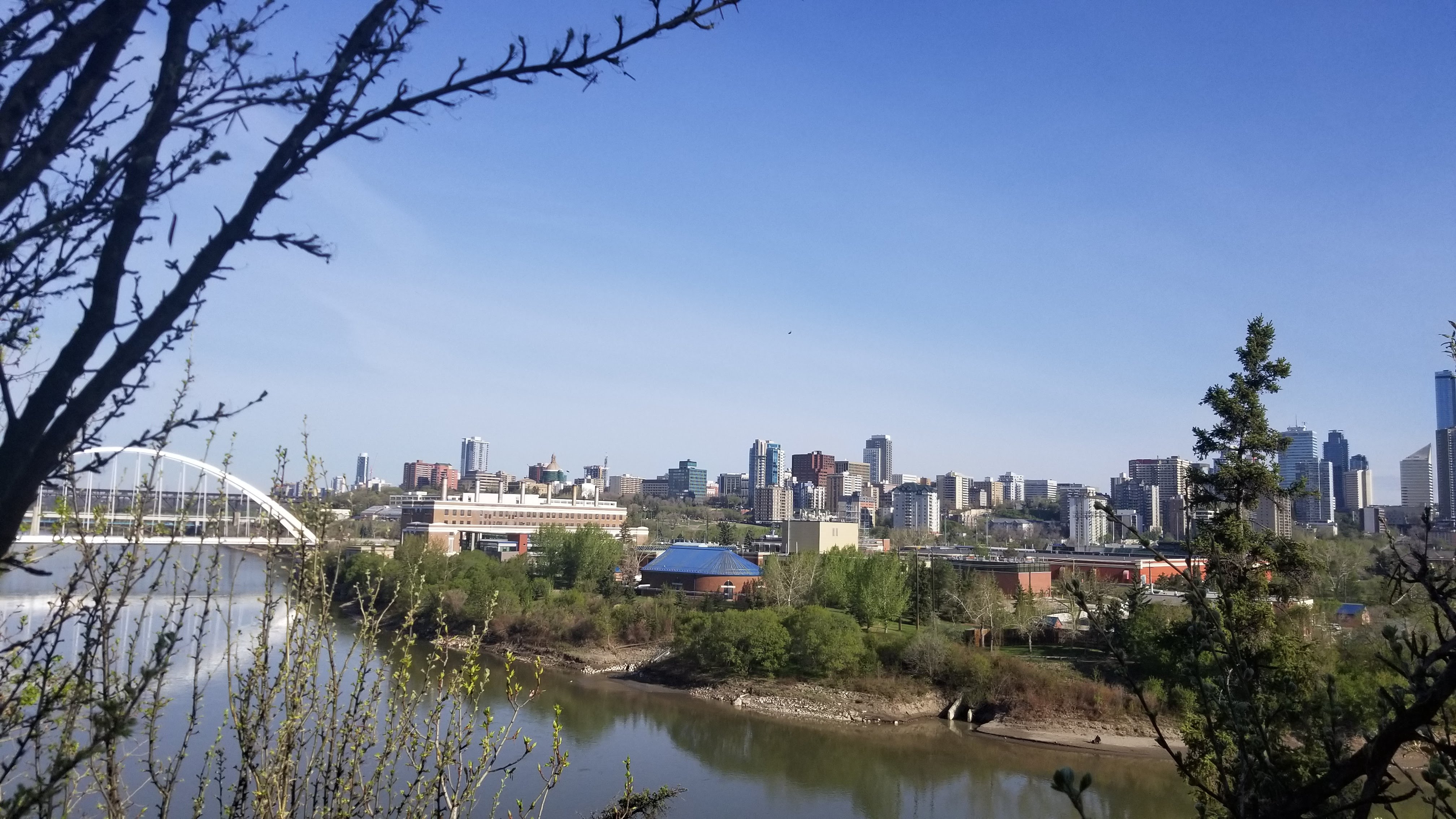
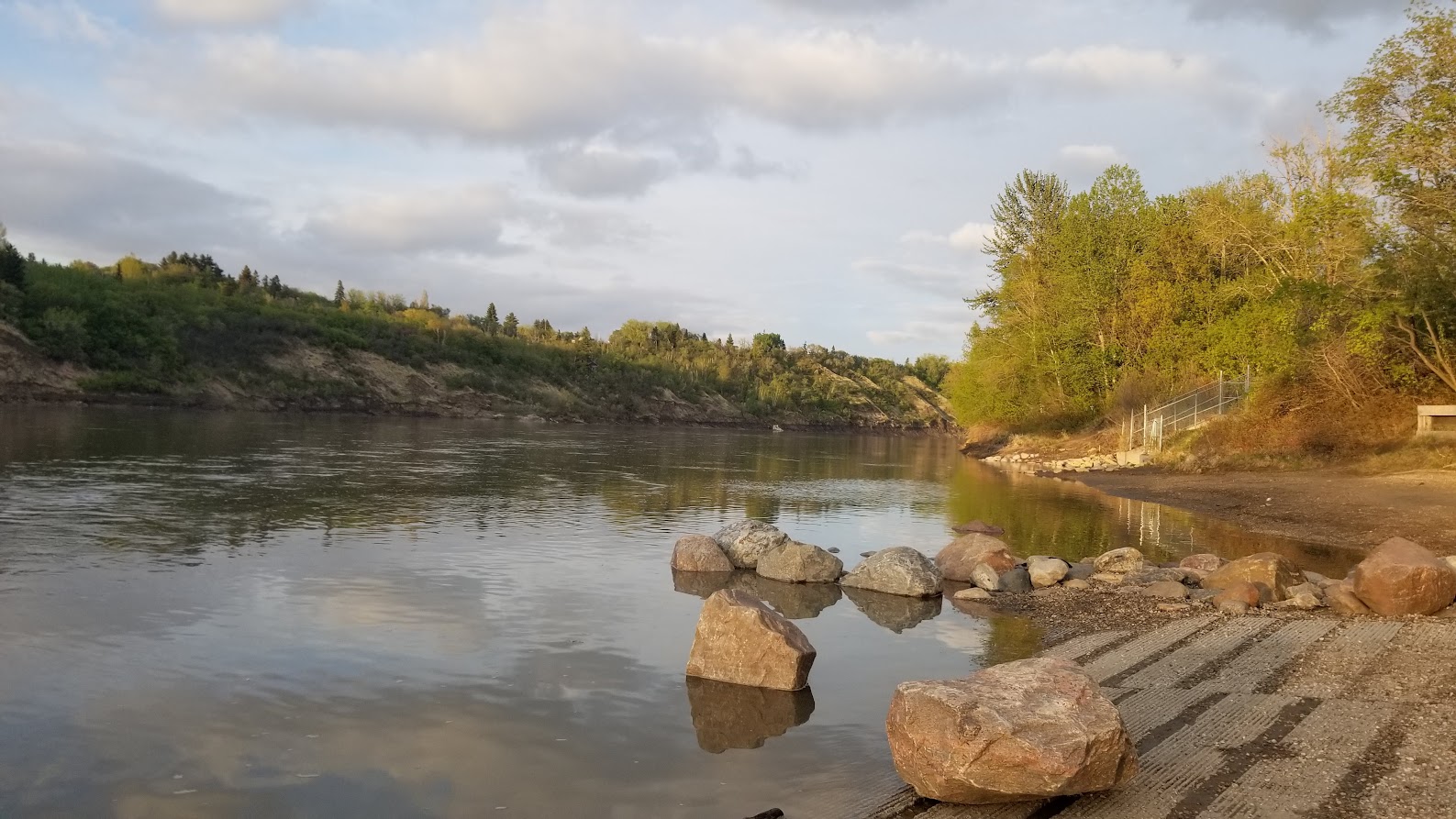
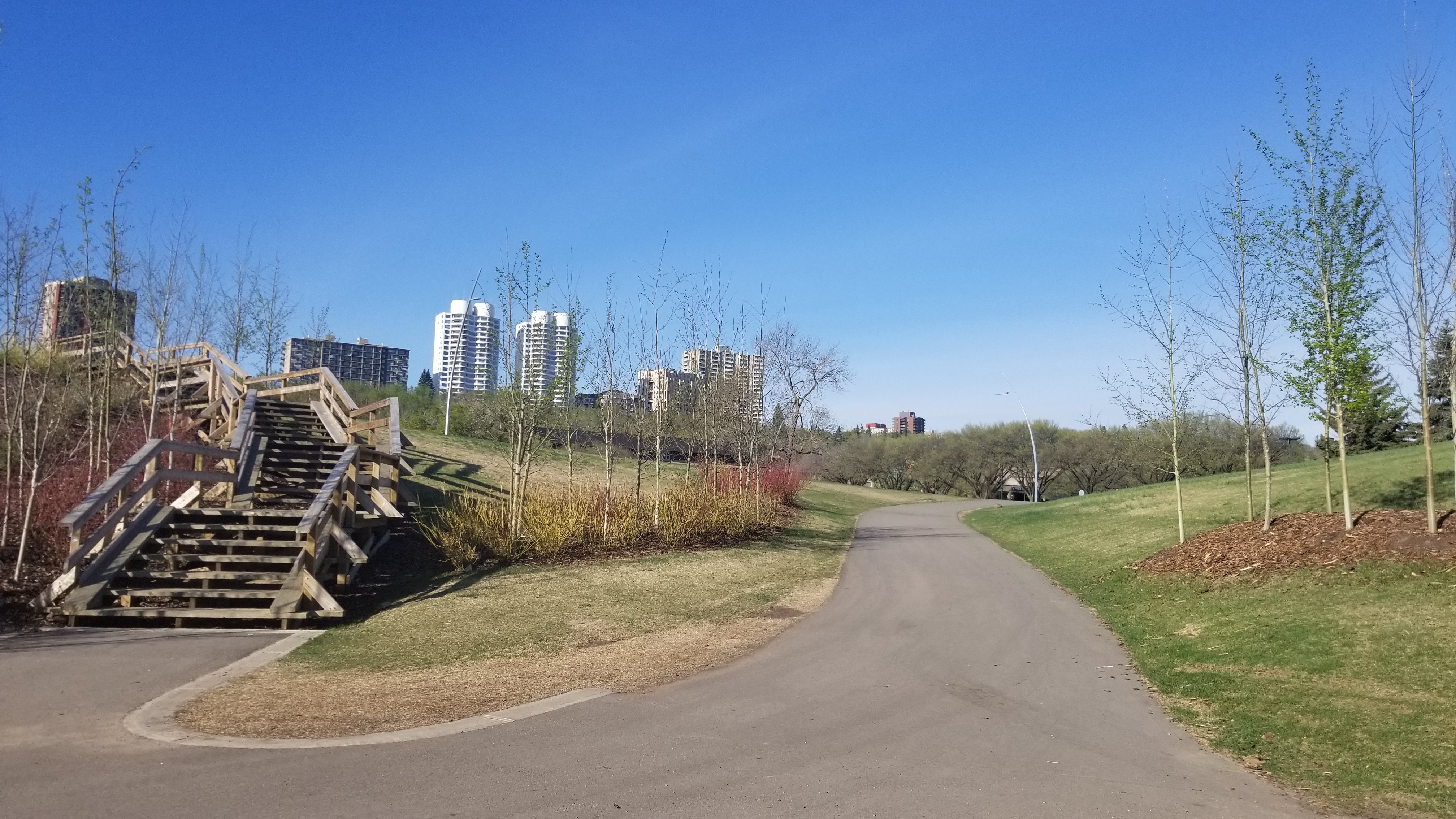
During all those walks, time and again I was very impressed with the City of Edmonton’s investment in the well-being of its residents. There are well-maintained pedestrian trails as well as bicycle trails all along the river.
I am working at the same residential property management company that I joined since we came to Edmonton. On the other hand, in June this year, Helen got licensed as a Practical Nurse (LPN) and our daughters are doing great at school. We have also become Canadian citizens, may God bless the Canadian government who accepted our immigration to Canada and now granted us citizenship.
Over the past six years, in addition to work and study, God gave us different opportunities to serve him, and here are the highlights of the main ones:
- Oral storytelling (specifically the STS approach; http://simplythestory.org) was one of the tools I had used in South Sudan. And when we came to Edmonton, I conducted one STS training at our local church (2016) and I keep telling bible stories from time to time, especially to kids.
- Kairos course is a condensed missions course. I took this course in Kenya in 2012 and when we came to Edmonton, I participated in conducting two Kairos Courses hosted by two C&MA churches (2016 & 2017).
- At the local Eritrean church that we joined here, there was a need for training people on evangelism. So, I developed an eight session training and taught it at our church together with our pastor (2017).
- One of the blessings in Canada is the opportunity to have a reliable internet connection. Because of that I was able to be involved in several online trainings. One of these was an online training on Disciple Making Movements (DMM); in 2019, I was able to train Eritreans who live in different parts of the world.
- If there is any film that I had watched over and over, it is the Jesus Film, which is believed to be the most watched and most translated film of all time (wikipedia). I watched it in Tigrinya, English, Arabic, Tigre, Amharic and Dinka languages repeatedly. This is a great tool that the Lord has given for the advancement of his gospel. I wanted this film to be translated into the Blin language of Eritrea; the Jesus Film Project also had wanted to translate the film into Blin. As a result, despite the many challenges we faced while working on the Blin translation, by God’s grace, a friend of mine and I were able to translate the film into Blin by the help of the Jesus Film Project team (2018-2019). The Jesus Film in Blin is available at https://www.jesusfilm.org/watch/jesus.html/blin.html.
- Since fall 2017, I am involved in the children’s ministry of our local church, and was able to participate in curriculum selection, program development, teaching kids, and training volunteers. Most Eritrean churches in Canada don’t have well developed children’s ministries mainly due to lack of trained children’s ministry teachers and volunteers. To fill this gap, in our church, together with my colleagues in the ministry, I participated in conducting training for children’s ministry teachers and volunteers. Furthermore, I am also taking online courses at the Children’s Ministries Institute of Child Evangelism Fellowship.
- When I was in South Sudan, I had the opportunity to travell to Khartoum twice (2012 and 2013) and teach a course on missions at Berea Ministers’ Training Center. Likewise, last year I was also able to teach the course at the same school through Zoom and I am scheduled to teach a course on leadership in November this year. In addition, I also had the opportunity to teach Basic Tigrinya Grammar at Bethel Bible College (Edmonton branch) last year and this year.
- In addition to the above, at our church, I served as Secretary of the Board of Elders (Oct. 2017 – January 2019) and Helen served as Women’s Ministry leader (June 2018 – May 2019).
- In August this year we had a great visit to the US. My next blog update will focus on that.
What about South Sudan? Did I maintain communication? Well, I am not very good at communication. Yet I did my best to communicate with some of the pastors from the Aduel area of South Sudan. From what I hear from them, it is now over a year since the security situation in East Rumbek areas has significantly improved and Christianity is growing in the face of all challenges the people are facing. Pastor Peter Monyde is one of the main pastors that WGM trained in Oral Bible Storytelling, Community Health Evangelism and Farming God’s Way. In the past two years, Peter and other two pastors from the East Rumbek area attended a two-year bible school in Wau, South Sudan. They have now started training some of their fellow pastors. Early this month they did few days training for pastors who came from different villages; they will continue after new year. Please also keep us in your prayers for the Lord’s direction as we seek to get His leading and direction for the next chapter of our life and ministry. God bless you!

 BEYOND RIVERS